FDA-Cleared · Non-Invasive · Insurance Covered

TMS Therapy in Utah, for when antidepressants haven't been enough.

If you've tried two or more antidepressants without finding relief, the issue isn't a lack of effort on your part. Your brain biology may simply respond to a different kind of treatment, one that works on the brain directly.

Voted Best Psychiatrist 2023
Medicare & major insurance
St. George & Cedar City
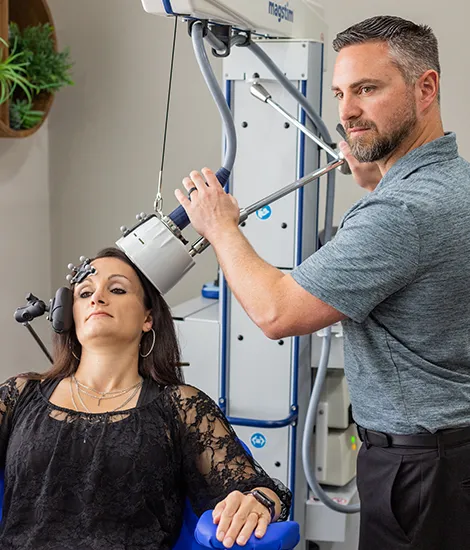
TMS therapy at Better Balance Psychiatry in St. George and Cedar City, Utah
The Basics

What is TMS Therapy?

TMS (transcranial magnetic stimulation), also called rTMS or repetitive TMS, is an FDA-cleared, non-invasive, drug-free treatment that uses focused magnetic pulses to stimulate the regions of the brain responsible for mood regulation. It's performed in our office, requires no anesthesia, no sedation, and no recovery time. Most patients drive themselves to and from treatment and go right back to work.

TMS is widely covered by insurance for treatment-resistant depression, and clinical research also supports its use for anxiety, OCD, PTSD, and ADHD. At Better Balance Psychiatry, treatment is delivered using MagStim Horizon technology and supervised by board-certified psychiatrists at our St. George and Cedar City locations, serving patients across all of Utah.

Communities We Serve

In-office TMS treatment is available at both our St. George and Cedar City clinics. Patients travel to us from St. George, Cedar City, Hurricane, Ivins, Washington, Santa Clara, Parowan, Enoch, Brian Head, New Harmony, La Verkin, Toquerville, Kanab, Mesquite, and across southern Utah. Initial evaluations are also available by telehealth for patients anywhere in the state.

The Treatment

What transcranial magnetic stimulation actually is.

TMS uses focused magnetic pulses (the same field strength as a standard MRI) to activate underactive regions of the brain involved in mood regulation. It's FDA-cleared, well-studied since the 1980s, and works without entering the bloodstream, so it carries none of the systemic side effects that come with antidepressant medication.

During a session, a small electromagnetic coil is positioned against your scalp. The coil delivers short, repetitive pulses that pass painlessly through the skull to stimulate the dorsolateral prefrontal cortex, the area of the brain responsible for mood regulation. In depression, this region is consistently shown to be underactive on functional brain imaging.

By restoring activity in that circuit over the course of treatment, TMS can shift the underlying neurobiology of depression. Improvement is gradual. Most patients notice changes in sleep, energy, or motivation within the first two to four weeks. A standard course runs 36 sessions, after which many patients require no maintenance.

At Better Balance Psychiatry, treatment is delivered using MagStim Horizon technology and supervised by board-certified psychiatrists in both our St. George and Cedar City offices.
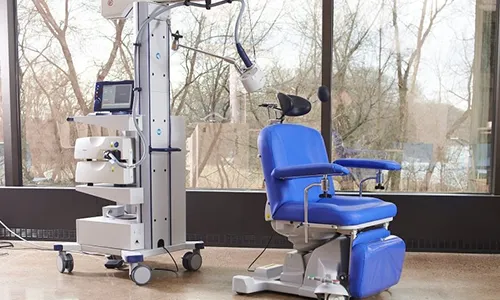
MagStim Horizon TMS therapy chair at Better Balance Psychiatry in St. George, Utah
The Process

From consultation to completion.

We walk every patient through the same clear path. No surprises, no hidden steps.

1

Consultation & eligibility

You meet with a board-certified psychiatrist for a full evaluation. We review your history, current medications, and previous treatments.

2

Insurance verification

Our team verifies your benefits before treatment begins. Most major insurance plans, including Medicare, cover TMS for treatment-resistant depression.

3

Brain mapping

A one-time mapping session identifies the precise stimulation target for your brain. This calibration is what makes TMS targeted, not generic.

4

Daily sessions & follow-up

Five days a week for six to eight weeks. Sessions last 19 to 37 minutes. Ongoing check-ins with your psychiatrist throughout.

Why Better Balance

Southern Utah's most experienced TMS practice.

Board-certified psychiatrists

Every patient is evaluated and supervised by a board-certified psychiatrist, not a technician or nurse practitioner alone. TMS requires medical oversight, and our patients get it.

Voted Best in Southern Utah

The region voted us Best Psychiatrist in 2023. We've been the destination practice for advanced psychiatric care across St. George and Cedar City.

MagStim Horizon technology

We use the same FDA-cleared device used in major academic medical centers. Mapping precision is the difference between TMS that works and TMS that doesn't.

Two Utah locations

In-office treatment in both St. George and Cedar City. Patients travel from across southern Utah: Hurricane, Ivins, Washington, Parowan, Enoch, and New Harmony.

Insurance verified up front

Our team handles benefits verification, prior authorization, and ongoing claims so you can focus on treatment, not paperwork.

Full spectrum of care

If TMS isn't right for you, we offer IV Ketamine, Spravato, medication management, IOP, and therapy under one roof. You're not locked into one path.

Compare Your Options

How TMS compares to other depression treatments.

Patients usually arrive at TMS after trying antidepressants and talk therapy. Here's how TMS stacks up against the alternatives.

TMS Therapy Antidepressants ECT (Shock Therapy) IV Ketamine
How it works Magnetic pulses target the brain region involved in depression Systemic medication adjusts brain chemistry through the bloodstream Electrical current induces a brief seizure under anesthesia IV infusion modulates glutamate receptors in the brain
FDA-cleared Yes (depression, OCD, anxious depression, smoking cessation) Yes Yes Off-label for depression; Spravato (esketamine) is FDA-approved
Systemic side effects None Common: weight changes, sexual dysfunction, fatigue, nausea Memory issues, confusion, requires anesthesia Mild dissociation, brief blood-pressure changes
Anesthesia required No No Yes No (monitored sedation only)
Time commitment 19 to 37 minutes per session, 5 days a week for 6 to 8 weeks Daily, often for years 2 to 3 sessions per week for several weeks, hospital-based Weekly infusions, 40 to 60 minutes each
Insurance coverage Widely covered for treatment-resistant depression Widely covered Covered, but often requires inpatient setting Spravato widely covered; IV ketamine usually not
Drive yourself home Yes, immediately after Yes No, requires recovery No, requires ride home

Not every treatment is right for every patient. During your consultation, we'll review your history and help you decide whether TMS, IV ketamine, Spravato, or another approach makes the most clinical sense.

Your Care Team

Meet the psychiatrists overseeing your treatment.

TMS is medical care. The clinician supervising your treatment matters as much as the technology itself.

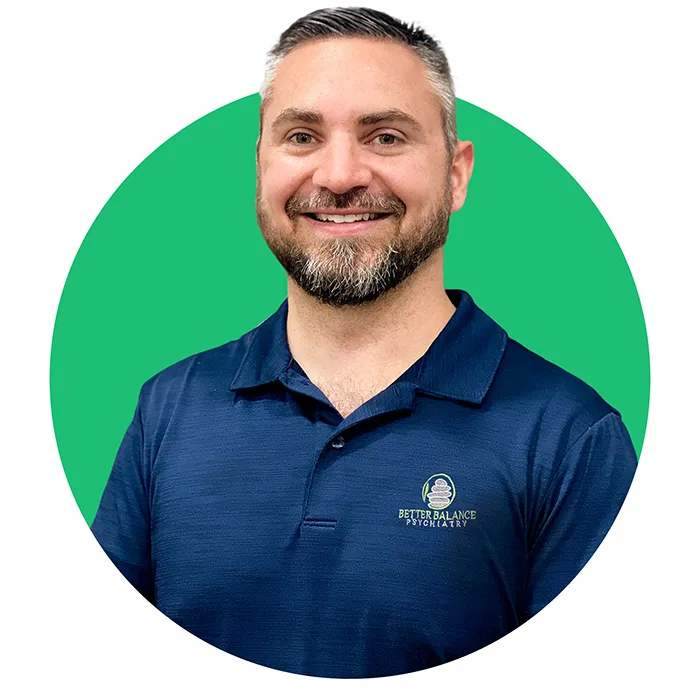
Dr. John Hendleman, M.D., Board-Certified Psychiatrist and founder of Better Balance Psychiatry

Dr. John
Hendleman

M.D. · Board-Certified Psychiatrist · Founder

Dr. Hendleman founded Better Balance Psychiatry to bring advanced, evidence-based care to southern Utah. He specializes in TMS, ketamine-assisted treatment, and complex medication management, with particular focus on treatment-resistant depression and trauma in uniformed service members.

Learn More
Dr. Brian Nyberg, M.D., Board-Certified Psychiatrist at Better Balance Psychiatry

Dr. Brian
Nyberg

M.D. · Board-Certified Psychiatrist

Dr. Nyberg specializes in trauma-informed care, attachment disorders, anxiety and mood disorders, ADHD, and advanced treatments including TMS and IV ketamine. His experience spans inpatient crisis stabilization, outpatient psychiatry, and adolescent residential care.

Learn More
Insurance & Coverage

TMS is covered by most major plans.

For treatment-resistant depression, TMS is widely covered when standard medical criteria are met. We'll handle the paperwork.

  • Select Health
  • Medicare
  • TRICARE
  • Blue Cross Blue Shield
  • Aetna
  • UnitedHealthcare
  • Cigna
  • Humana
  • Multiplan / PHCS
  • DMBA
  • EMI
  • Motiv
Visit Us

Two convenient Utah locations.

In-person TMS treatment is available at both our St. George and Cedar City clinics. Both offices offer the same care team, the same MagStim Horizon technology, and the same insurance acceptance.

St. George Office

Address 20 N Main St, Suite 205
St. George, UT 84770
Hours Monday to Friday
9 AM to 5 PM

Cedar City Office

Address 444 S Main St, Suite A4
Cedar City, UT 84720
Hours Monday to Friday
9 AM to 5 PM
Stories of Growth and Healing

What people say about Better Balance Psychiatry.

Real reviews from across Southern Utah.

★★★★★

"The front staff are always super energized, upbeat, and welcoming. Kell is always on the go in the office making sure patients are taken care of while waiting for their appointment. The providers are respectful and caring."

Cody
Cedar City, UT
★★★★★

"The staff at Better Balance in Cedar are always friendly and kind. Kale goes out of her way to make anyone feel welcome. The office staff are always ready to help and make you feel comfortable."

Justice
Cedar City, UT
★★★★★

"I love Better Balance Psychiatry! I did TMS with them and received so much help with my depression. The girls that do the treatment are so good at making you feel comfortable and are so welcoming. The providers also know their stuff and make sure to check in with you often to make sure everything is going good. I'd highly recommend for anyone who is seeking help with their mental health."

Baylee
St. George, UT
★★★★★

"Everyone I've worked with in the office is absolutely amazing. I've had a wonderful experience every time. They're great at helping you feel comfortable. Very grateful for their team."

Britney
St. George, UT
Frequently Asked

Questions patients ask before starting TMS.

Is TMS therapy safe?

Yes. TMS is FDA-cleared and has been studied since the 1980s. The magnetic field strength is comparable to a standard MRI. Side effects, when they occur, are typically limited to mild scalp tenderness or a brief headache that resolves on its own.

Does TMS hurt?

TMS is not painful. You'll feel a tapping sensation on the scalp during the magnetic pulses. Most patients adjust within the first few sessions and many read, listen to music, or simply relax during treatment.

How long does a course of TMS take?

A standard course is 36 sessions, delivered five days a week over six to eight weeks. Each session lasts 19 to 37 minutes. You can return to normal activities immediately after, including driving and work.

Does insurance cover TMS therapy in Utah?

Most major insurance plans, including Medicare, cover TMS for treatment-resistant depression when medical criteria are met. We accept Select Health, TRICARE, Blue Cross Blue Shield, Aetna, UnitedHealthcare, Cigna, Humana, Multiplan/PHCS, DMBA, EMI, Motiv, and more. Our team verifies your benefits before your first session.

What conditions does TMS treat?

TMS is FDA-cleared for major depressive disorder, anxious depression, obsessive-compulsive disorder, and smoking cessation. Clinical research also supports its use for generalized anxiety, PTSD, and ADHD. Eligibility is determined during your evaluation.

How is TMS different from antidepressants?

Antidepressants work systemically through the bloodstream and can cause side effects throughout the body, including weight changes, sexual dysfunction, and fatigue. TMS works directly on the brain regions involved in mood regulation, with no systemic side effects, no drug interactions, and no need to ingest anything.

Do I need a referral to start TMS at Better Balance?

No referral is required. Contact us directly to schedule an evaluation with one of our board-certified psychiatrists. We serve patients in St. George, Cedar City, and throughout Utah by telehealth for the initial consultation.

How much does TMS therapy cost in Utah?

With insurance coverage, most patients pay only their standard copay, deductible, or coinsurance for each session. Self-pay costs vary by treatment course and are reviewed during your consultation. Our team verifies your benefits and explains your full out-of-pocket cost before treatment begins. No surprise bills.

Who is a good candidate for TMS?

You may be a candidate for TMS if you have major depressive disorder and have not had adequate relief from at least one antidepressant, if you've experienced side effects from medication that you can't tolerate, or if you have OCD, anxious depression, or PTSD. You should not have ferromagnetic metal implants in your head or a history of seizures. Eligibility is determined by your psychiatric evaluation.

What are the side effects of TMS?

Side effects of TMS are mild and limited to the treatment area. The most common are scalp tenderness, a brief headache, or a tapping sensation during the session, which typically resolve on their own. Because TMS does not enter the bloodstream, it does not cause the weight gain, fatigue, sexual side effects, or memory issues associated with antidepressants and ECT.

How is TMS different from ECT (electroconvulsive therapy)?

TMS and ECT are both brain-based depression treatments, but they're very different. TMS uses targeted magnetic pulses, requires no anesthesia, and has no memory side effects. ECT uses electrical current to induce a brief seizure under anesthesia and can cause short-term memory issues. TMS is typically the first advanced option offered after medication, while ECT is usually reserved for severe cases.

How often will I need TMS sessions?

A standard TMS protocol is five sessions per week, Monday through Friday, for six to eight weeks. Each session lasts 19 to 37 minutes. Some patients also benefit from periodic maintenance sessions after their initial course is complete, though many require none.

Taking the next step is simple.

Schedule a confidential consultation with our psychiatric team. We'll review your history, verify your insurance, and let you know whether TMS is the right fit. No referral required.

In-person treatment in St. George and Cedar City · Initial consults available by telehealth

Become a Patient
Become a Patient